Categories
News

Cottage Meetings

I enjoyed attending a couple of cottage meetings this summer, including one hosted by Stand for Orem last month and another hosted by state representative Nelson Abbott this week. Here’s a video of my remarks at the former event, which focus especially on both zoning and affordable housing, for whomever they may interest

I’m scheduled to attend two additional Stand for Orem cottage meetings before this August ends, one in English and one in Spanish—so, please come see me in-person, bring your questions to ask me, and let’s chat for a better Orem! For voters who can’t attend these meetings, Stand for Orem will record them for their YouTube channel.


UPDATE: Since posting this blog entry, one cottage meeting was limited to only four candidates, and I didn’t make the cut, while the other cottage meeting (en español) was cancelled entirely. My apologies! But Ill attempt to host a booth on August 26th (Saturday) from 4:30 PM to 6:30 PM in Orem’s Center Street Park at a Liberty Revival.

Categories
Views

Zoning Articles

I tried my best to make a persuasive concise case on this website against zoning and for private property rights. I don’t believe that I succeeded at this task as well as I’d like, but perhaps some other authors can make an even more persuasive case than I did—so, I’ll link a few articles below about zoning that I found especially worthwhile to read, for whomever it may interest and for whatever they may be worth

Reason: “Land Use Without Zoning” (1974 Feb)

This Reason review of a book entitled Land Use Without Zoning written by zoning expert Bernard Siegan presents one of the best concise cases that I’ve ever read (yet) against zoning. Its author explains how zoning is counterproductive, as proven by hard data, and also why nonzoning is preferable policy, as exemplified by the city of Houston.

FEE: “Houston Says No to Zoning” (1994 Aug 01)

This FEE article explains why Houstonians repeatedly rejected zoning to better serve homebuyers, including by keeping housing affordable. Some argued that zoning was essential to preserve Houston’s character, and that nonzoned land would allow single-family homes to be overrun by high-density housing; however, these fears proved unjustified.

Mises Institute: “How Zoning Rules Would Work in a Free Society” (2009 Jun 17)

This Mises Institute article explains how neighbors can exercise their rights to both property and contract to establish private restrictive covenants, which achieve zoning-like benefits without the detriments of subjugating individual land rights to municipal central plans, which plans too-often serve the interests of politicians over the interests of people.

Mises Institute: “Zoning Laws Destroy Communities” (2010 Apr 30)

This Mises Institute article explains how zoning harms neighborhoods by destroying their sense of community, ruining their neighborhood schools, increasing traffic congestion and its resultant air pollution, impeding their residents’ prosperity while facilitating their poverty, replacing reliance upon ourselves with reliance upon politicians, and allowing crime.

Deseret News: “Utahns revere the Constitution — except in zoning” (2014 Sep 05)

This Deseret News editorial asserts that zoning ordinances violate both God-given rights (especially property rights) and Constitutional law, which means that it’s hypocritical for so many Utahns to uphold zoning while simultaneously claiming to revere the U. S. Constitution—and that it’s immoral for us to exert control over land that we don’t own.

FEE: “How Deregulating Real Estate Markets Can Solve America’s Shortage of Affordable Housing” (2021 Apr 10)

This FEE article asserts that zoning people’s land is immoral in principle, that communist experiments in both Russia and China have proven the folly of socializing land, and that abolishing zoning would render housing far more affordable (as exemplified by abolishing similar Progressive Era regulations over both telecommunications and airlines).

Categories
News Views

Imagine Orem Station Workshop

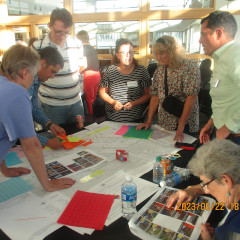
This evening, Orem’s Planning Commission hosted an Imagine Orem Station Workshop, which I attended as a thoughtful observer.

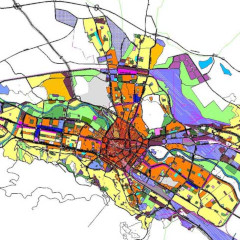
This workshop’s purpose was to invite Orem’s residents to provide their input to the commission as part of its “visioning” process to devise central plans for Orem’s land-use surrounding the UTA FrontRunner’s Orem station. And, so, its participants got to play at central economic planning, imagining where local homebuilders might construct what sorts of houses, where local businesses might operate what sorts of stores, where local politicians might provide what sorts of recreational facilities, et cetera, after which they presented their land-use maps for consideration.

I understand that this visioning exercise was funded by the Mountainland Association of Governments (MAG), by the way, which is a local regional-planning organization. Although this meeting’s hosts generally favored zoning for high-density housing served by heavily-subsidized mass-transit, which is often favored by those who prefer overgrown government for various reasons, most participants favored zoning for single-family housing instead, an an exercise of political power to try to preserve Orem’s current character as Family City USA. Which is very understandable.

But I favor a third option, which I believe is even better, which is to end zoning entirely. Although I like municipal planning for expanding public infrastructure to keep-up with municipal growth, I assert that municipal planning goes too far whenever it dares to oversteps those limits (including via zoning) to infringe upon land rights. Respecting private property rights decentralizes power and enables property owners (within the limits of their rights) to make their own plans about their own propertyand the plans of the many are generally far superior to the plans of the few.

Sadly, municipal zoning has become so commonplace that most Americans don’t question itbut we should! Zoning’s alleged benefits involve forcing markets to do what they’d generally already do freely on their own, but at a terrible price. Zoning’s burdensome costs are that it curtails development, reduces competition, reduces housing supplies while raising housing costs, mandates false “order” and/or aesthetics over genuine needs, excludes “undesirables,” wastes people’s valuable time with needless paperwork, retards economic progress, and lowers standards-of-living.

Zoning laws, combined with other burdensome regulations, are causing America’s housing costs to skyrocket into a so-called “housing crisis,” which is driving Americans from single-family homes to high-density alternatives, whereas reducing such regulations would reverse this trend. And this explains why Houston, which enjoys virtually no zoning laws, also enjoys some of America’s most affordable housing, while highly-regulated Los Angeles’ skyrocketing costs-of-living are driving away its middle class in droves to more-affordable cities like… unzoned Houston.

Let’s please render Orem more like Houston and less like Los Angeles in this regard! Please read my webpage about Zoning for more.