Stand for Orem asked me to express my beliefs about the Utah Transit Authority (UTA) constructing a Bus Rapid Transit (BRT) system along Orem’s State Street, similar to the Utah Valley Express (UVX); here’s my response for whomever it may interest…
Thumbs down.
I believe that, as a public officer, my job is to assist my constituents in expertly defending their equal God-given (or natural) rights from others’ aggression. And that this duty includes helping them to defend their property rights from robbery. So, I don’t believe in compelling people to keep unprofitable businesses solvent, or in compelling some people to pay other people’s transit fares. It’s easy to be generous with other people’s hard-earned money, but it’s not right—and, so, I oppose compulsory “charity,” although I support the voluntary sort.
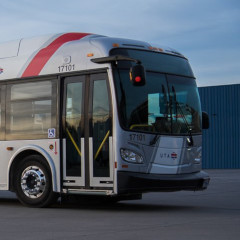
I understand that the Utah Transit Authority is about 80% subsidized by taxpayers, which means that, for every $1 its riders pay in fare, others are compelled to pay $4. And this is wrong. And the UTA’s extremely-subsidized business model is not only wrong in general, but so is its [Utah Valley Express] system specifically. This system didn’t make economic sense to construct, so it wasn’t created by businesspeople—instead, politicians compelled taxpayers from Key West to Prudhoe Bay to build it, anyway, and they are still compelling taxpayers to maintain it. This money-sucking BRT system impedes traffic of automobiles that most people prefer to drive, in exchange for the dubious benefit of enabling its riders to wait up to 10 minutes in order to catch a fancier-than-average bus that will convey them to their destination up to 10 minutes faster than a car would—but only at peak hours and only for those few customers whose starting-point and ending-point both lie along its route, all of which limits its advantages. So, it seems to me that Provoans are even-worse-off with Bus Rapid Transit than they would have been with standard buses, although buses are still bad compared with emerging alternatives.
UTA buses, with their standardized schedules and routes, are antiquated 20th-century technology compared with modern on-demand ride-hailing services like Uber and Lyft that offer customized schedules and routes. I’d love to see more Uber or Lyft drivers freely donating rides to poor residents, and/or more generous people voluntarily raising funds to pay for such rides. Such voluntary philanthropy via private ride-hailing would do us all far more good with far less waste than compulsory subsidies to public mass-transit.
Let’s live free.
– David Edward Garber
In short, I sometimes trust political systems to defend my rights, but not to do much else, including to provide us with innovative efficient effective transportation, which is better left to private-sector businesses, aided by voluntary philanthropy—so, I oppose Orem BRT.


 David for Liberty