Categories
Views

CARE Tax

In 2005, Orem enacted a small ongoing Cultural Arts and Recreation Enrichment (CARE) Tax to enhance both recreation and cultural arts in the City of Orem. Although I greatly appreciate the good intentions for which this tax was enacted, I also worry that those good intentions are being implemented in a less-than-ideal manner.

If a cause is truly worth supporting, then its champions should never need to compel anyone to support it, but should be able to freely persuade them instead—perhaps not everyone, but enough. And persuasion is the right way to achieve almost everything; coercion should generally be reserved ONLY as a necessary last resort in defense.

We charter political systems, including municipalities, to use their coercive powers to expertly assist us in defending our equal God-given (or natural) rights so that we may remain free. And this includes being free to spend our money as we choose, including on the arts. But our generosity should remain an individual choice, not a collective one.

Whenever our politicians communalize our paychecks and then divvy-up our income among those organizations that best curry their favor, they are not defending but violating our rights. And this practice is not only wrong in principle but it is also generally counterproductive, as the decisions of the few are inferior to the decisions of the many.

If any group wants my money, then they should ask me for it directly, not ask my politicians for my money. We’re all better-off when we stop letting our politicians decide how to engage in philanthropy on our behalf, and instead learn to think for ourselves. Asserting self-responsibility is a vital part of the freedom that we should ideally enjoy.

And this is why, due to matters of both principle and effectiveness, as we Oremites debate renewing this CARE Tax during 2023, we should choose to privatize this process instead. And, as our city councilors spend less time donating our money for us, they’ll be able to spend more time on defending our rights, which is their core duty.

Categories
Views

Library Displays

An Orem voter asked me today for my opinion about the Orem Public Library participating in LGBTQ+ Pride Month celebrations by hosting displays that feature relevant books. Here’s my response, for whomever it may interest and for whatever it may be worth…

Although the library is a public institution, it’s also essentially a business. And I think that any business should serve its customers, catering to their needs and virtuous wants.

On the subject of virtue, I consider myself to be morally-obligated to respect the equal God-given (or natural) rights of LGBTQ+ folks to freely preach-and-practice what they please, to the extent that they don’t overstep the innate limits of their own innate rights to violate the equal innate rights of other people; however, at the same time, I consider myself to be not-morally-obligated to assist them in promoting acceptance of their lifestyles to those around them, but to freely exercise my own rights within their proper limits to preach-and-practice what I please instead.

Along with moral considerations, there are also economic considerations—and, as for what Orem’s populace wants, I’m not convinced that they currently show widespread demand to read LGBTQ+ books compared with other localities, so I see little reason for Orem’s public library to expend major resources to try to cater to minor interests. Orem’s public library doesn’t need to feature certain of its books to honor annual celebrations that are popular in other parts of the USA but not here. Nor does Orem’s public library even need to purchase books simply because they exist. I think that business decisions about both which existing books to buy and which bought books to feature should be made with sight of how to best serve the library’s full range of patrons, a few of whom may appreciate LGBTQ+ books but most of whom don’t. If some factions believe that they’re being under-served by the Orem Public Library as a result of decisions like this, then they’re always welcome to freely try to persuade library decisionmakers to change such policies—or, as long as the USA remains a relatively-free country, they’re also welcome to engage in free enterprise by establishing their own startup lending libraries to cater to under-served and/or niche market segments. Free markets, in which God-given rights to both property and contract are fully respected, are wonderful at steadily innovating over time toward greater efficiency, effectiveness, and proper customization at serving customers well.

Serving customers effectively becomes more difficult in some ways whenever businesses cease being accountable directly to customers, as politicians interject themselves between them as middlemen—and, frankly, I’m not keen on acting in this capacity. But, as long as Orem’s city council doubles as the library’s Board of Directors… If elected as city councilor, then my executive business decision (as one of 7 board members) would be to not bother to post such displays, but instead to feature sets-of-books that would cater to more-popular customer demands.

So, I hope that this e-mail explains sufficiently what my decision would be about Pride displays, and why-and-how I arrived at this decision. If not, then I’d be happy to try again.

– David Edward Garber

I’d be curious to know others’ thoughts about the Orem Public Library and especially how it could serve its patrons better. Which local market segments are being overrepresented or underrepresented? Which great innovations should our library consider implementing?

Speaking of innovations, libraries in the Information Age are surprisingly still thriving, but perhaps because many are embracing a broader role as community centers focused on intellectually-related pursuits. As a result of this shift in focus, a 21st-century library may include not only books but also (1) social space like a hot-cocoa café with a giant playable chessboard plus a great scenic view, (2) a wide variety of non-book media like CDs and/or DVDs and perhaps even a movie theater, (3) recording space for capturing oral histories, (4) a family-history center to research ancestry, (5) educational space that may provide a variety of classes like (a) English classes for non-native speakers, (b) GED classes for students, (c) reading classes for illiterate adults, and/or (d) technology classes for seniors, (6) commercial space that may offer résumé help and/or business workshops, (7) innovation space, (8) bookmobiles and/or other delivery services, and so forth. Perhaps someday flying drones will safely efficiently drop-off checked-out books at patrons’ doorsteps on-demand.

One of the best ways to spur innovation is through free markets. Although private libraries thrived before public libraries prevailed, some library fans like Penn Jillette argue that compelling libraries is immoral, and that they would thrive better if re-privatized. What do you think?

Categories
Views

No “Bribes”

When, in 2007-2008, I first started to pay attention to the Utah Republican Party’s nominations process, people warned me that Utahn candidates too-often tried to “wine-and-dine” delegates into supporting them by handing-out freebies, including meals, swag, et cetera. And I noticed, whether from secondhand observation or from firsthand experience as a GOP delegate, that there was too much truth to these warnings. One candidate even tried to treat me to an amazing free hot-air balloon ride!

I decided early that I would never accept such “bribes” from any candidate whose name would appear on my ballot, even if it was nothing more than candy from a booth, and even if I felt confident that it wouldn’t “sweeten my disposition” any (just in case it did anyway). In this commitment, I felt inspired by the example of Sir Thomas More in A Man for All Seasons (1966), who conscientiously rejected an expensive silver cup given to him by a person whose court case he was adjudicating.

I decided likewise that, as a candidate myself, I would never attempt to win-over voters through any means other than great ideas. And this is why, although I normally love being generous, you’ll never find any free candy at my campaign booths—and, although I might host a potluck meal, I’ll never host a free breakfast. Am I overreacting? Perhaps. Am I accusing my fellow candidates of trying to “bribe” people? No, I can’t read their hearts-and-minds and perhaps they’ve never thought-through it.

In any case, this is what I do and this is why I do it, and I’m content with it. Candy is never as delicious as liberty, anyway. I’ve never yet lived in a place in which the state fully owns both everyone and everything, and does whatever it pleases with both, but I worry intently that these United States are slowly degenerating in that direction, and I want do everything in my power to reverse that course before we finally arrive where we’re headed. And, with your support, I’ll do what I can to keep Orem free.

Categories
Views

Meet David

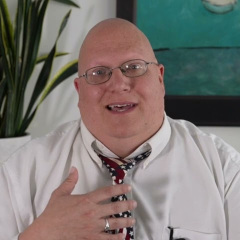
I thank the City of Orem for hosting a great “Meet the Candidates” event on 2023 Aug 10. Here’s a video recording of my self-introduction to Orem voters at that gathering. I’m passionate about freedom, and I yearn to help my fellow Oremites to enjoy the blessings of liberty to the extent that they’re willing-and-able to receive them.

I regret that I lacked enough time to address zoning well, which is likely Orem’s top issue in 2023. If you’d like to understand my views about this subject, then please peruse my website pages about fundamental political principles, municipal zoning ordinances versus individual property rights, and additional references to consider.

Categories
Views

Zoning Articles

I tried my best to make a persuasive concise case on this website against zoning and for private property rights. I don’t believe that I succeeded at this task as well as I’d like, but perhaps some other authors can make an even more persuasive case than I did—so, I’ll link a few articles below about zoning that I found especially worthwhile to read, for whomever it may interest and for whatever they may be worth

Reason: “Land Use Without Zoning” (1974 Feb)

This Reason review of a book entitled Land Use Without Zoning written by zoning expert Bernard Siegan presents one of the best concise cases that I’ve ever read (yet) against zoning. Its author explains how zoning is counterproductive, as proven by hard data, and also why nonzoning is preferable policy, as exemplified by the city of Houston.

FEE: “Houston Says No to Zoning” (1994 Aug 01)

This FEE article explains why Houstonians repeatedly rejected zoning to better serve homebuyers, including by keeping housing affordable. Some argued that zoning was essential to preserve Houston’s character, and that nonzoned land would allow single-family homes to be overrun by high-density housing; however, these fears proved unjustified.

Mises Institute: “How Zoning Rules Would Work in a Free Society” (2009 Jun 17)

This Mises Institute article explains how neighbors can exercise their rights to both property and contract to establish private restrictive covenants, which achieve zoning-like benefits without the detriments of subjugating individual land rights to municipal central plans, which plans too-often serve the interests of politicians over the interests of people.

Mises Institute: “Zoning Laws Destroy Communities” (2010 Apr 30)

This Mises Institute article explains how zoning harms neighborhoods by destroying their sense of community, ruining their neighborhood schools, increasing traffic congestion and its resultant air pollution, impeding their residents’ prosperity while facilitating their poverty, replacing reliance upon ourselves with reliance upon politicians, and allowing crime.

Deseret News: “Utahns revere the Constitution — except in zoning” (2014 Sep 05)

This Deseret News editorial asserts that zoning ordinances violate both God-given rights (especially property rights) and Constitutional law, which means that it’s hypocritical for so many Utahns to uphold zoning while simultaneously claiming to revere the U. S. Constitution—and that it’s immoral for us to exert control over land that we don’t own.

FEE: “How Deregulating Real Estate Markets Can Solve America’s Shortage of Affordable Housing” (2021 Apr 10)

This FEE article asserts that zoning people’s land is immoral in principle, that communist experiments in both Russia and China have proven the folly of socializing land, and that abolishing zoning would render housing far more affordable (as exemplified by abolishing similar Progressive Era regulations over both telecommunications and airlines).

Categories
Views

Orem BRT

Stand for Orem asked me to express my beliefs about the Utah Transit Authority (UTA) constructing a Bus Rapid Transit (BRT) system along Orem’s State Street, similar to the Utah Valley Express (UVX); here’s my response for whomever it may interest…

Thumbs down.

I believe that, as a public officer, my job is to assist my constituents in expertly defending their equal God-given (or natural) rights from others’ aggression. And that this duty includes helping them to defend their property rights from robbery. So, I don’t believe in compelling people to keep unprofitable businesses solvent, or in compelling some people to pay other people’s transit fares. It’s easy to be generous with other people’s hard-earned money, but it’s not right—and, so, I oppose compulsory “charity,” although I support the voluntary sort.

I understand that the Utah Transit Authority is about 80% subsidized by taxpayers, which means that, for every $1 its riders pay in fare, others are compelled to pay $4. And this is wrong. And the UTA’s extremely-subsidized business model is not only wrong in general, but so is its [Utah Valley Express] system specifically. This system didn’t make economic sense to construct, so it wasn’t created by businesspeople—instead, politicians compelled taxpayers from Key West to Prudhoe Bay to build it, anyway, and they are still compelling taxpayers to maintain it. This money-sucking BRT system impedes traffic of automobiles that most people prefer to drive, in exchange for the dubious benefit of enabling its riders to wait up to 10 minutes in order to catch a fancier-than-average bus that will convey them to their destination up to 10 minutes faster than a car would—but only at peak hours and only for those few customers whose starting-point and ending-point both lie along its route, all of which limits its advantages. So, it seems to me that Provoans are even-worse-off with Bus Rapid Transit than they would have been with standard buses, although buses are still bad compared with emerging alternatives.

UTA buses, with their standardized schedules and routes, are antiquated 20th-century technology compared with modern on-demand ride-hailing services like Uber and Lyft that offer customized schedules and routes. I’d love to see more Uber or Lyft drivers freely donating rides to poor residents, and/or more generous people voluntarily raising funds to pay for such rides. Such voluntary philanthropy via private ride-hailing would do us all far more good with far less waste than compulsory subsidies to public mass-transit.

Let’s live free.

David Edward Garber

In short, I sometimes trust political systems to defend my rights, but not to do much else, including to provide us with innovative efficient effective transportation, which is better left to private-sector businesses, aided by voluntary philanthropy—so, I oppose Orem BRT.

Categories
Views

Ballotpedia Survey

I completed Ballotpedia’s survey about me, which included questions about my positions on various issues. You’re welcome to review my responses to that survey. If you have questions about me, then please contact me anytime to ask them.

Categories
News Views

Candidate Interviews

I thank both the City of Orem and Stand for Orem for interviewing me in June about my motives, skills, experiences, priorities, solutions, and related topics. I’m embedding both of those videos below for whomever they may interest.

City of Orem interview of David Edward Garber on 2023 Jun 27
Stand for Orem interview of David Edward Garber on 2023 Jun 17
Categories
News Views

Imagine Orem Station Workshop

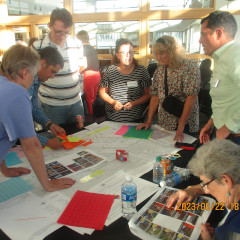
This evening, Orem’s Planning Commission hosted an Imagine Orem Station Workshop, which I attended as a thoughtful observer.

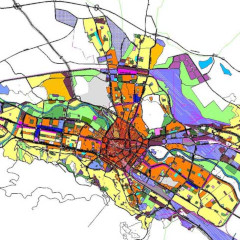
This workshop’s purpose was to invite Orem’s residents to provide their input to the commission as part of its “visioning” process to devise central plans for Orem’s land-use surrounding the UTA FrontRunner’s Orem station. And, so, its participants got to play at central economic planning, imagining where local homebuilders might construct what sorts of houses, where local businesses might operate what sorts of stores, where local politicians might provide what sorts of recreational facilities, et cetera, after which they presented their land-use maps for consideration.

I understand that this visioning exercise was funded by the Mountainland Association of Governments (MAG), by the way, which is a local regional-planning organization. Although this meeting’s hosts generally favored zoning for high-density housing served by heavily-subsidized mass-transit, which is often favored by those who prefer overgrown government for various reasons, most participants favored zoning for single-family housing instead, an an exercise of political power to try to preserve Orem’s current character as Family City USA. Which is very understandable.

But I favor a third option, which I believe is even better, which is to end zoning entirely. Although I like municipal planning for expanding public infrastructure to keep-up with municipal growth, I assert that municipal planning goes too far whenever it dares to oversteps those limits (including via zoning) to infringe upon land rights. Respecting private property rights decentralizes power and enables property owners (within the limits of their rights) to make their own plans about their own propertyand the plans of the many are generally far superior to the plans of the few.

Sadly, municipal zoning has become so commonplace that most Americans don’t question itbut we should! Zoning’s alleged benefits involve forcing markets to do what they’d generally already do freely on their own, but at a terrible price. Zoning’s burdensome costs are that it curtails development, reduces competition, reduces housing supplies while raising housing costs, mandates false “order” and/or aesthetics over genuine needs, excludes “undesirables,” wastes people’s valuable time with needless paperwork, retards economic progress, and lowers standards-of-living.

Zoning laws, combined with other burdensome regulations, are causing America’s housing costs to skyrocket into a so-called “housing crisis,” which is driving Americans from single-family homes to high-density alternatives, whereas reducing such regulations would reverse this trend. And this explains why Houston, which enjoys virtually no zoning laws, also enjoys some of America’s most affordable housing, while highly-regulated Los Angeles’ skyrocketing costs-of-living are driving away its middle class in droves to more-affordable cities like… unzoned Houston.

Let’s please render Orem more like Houston and less like Los Angeles in this regard! Please read my webpage about Zoning for more.